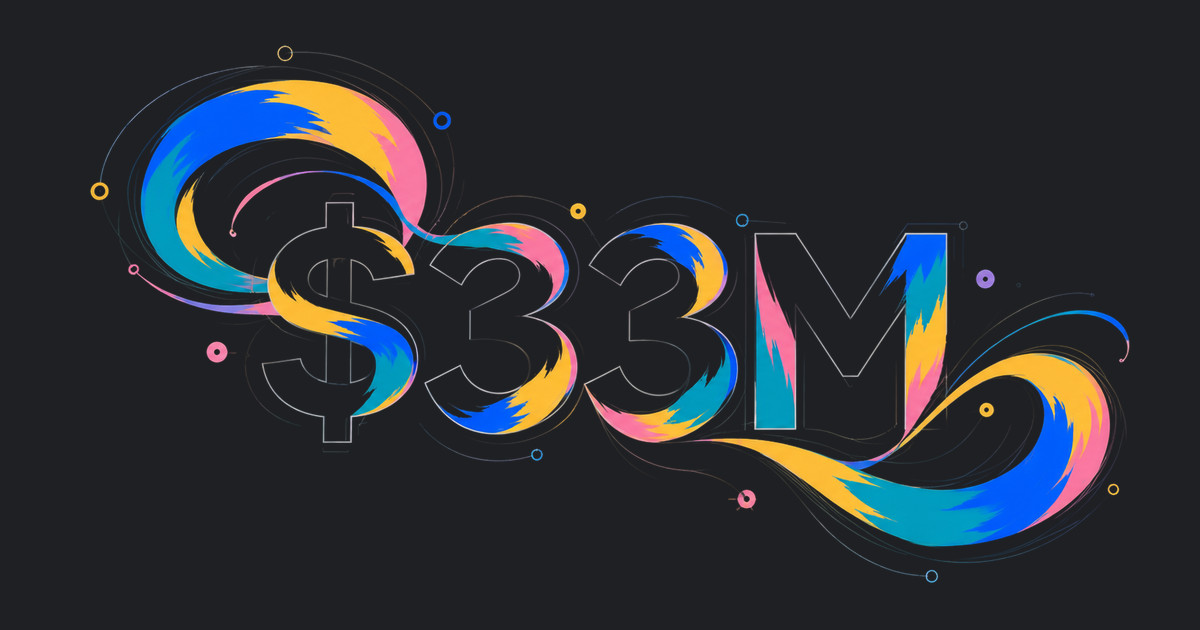
Tel Aviv, November 10, 2026 – Dreeze today emerged from stealth with $33 million in seed funding led by Norwest and Bessemer Venture Partners with participation from Claltech, and announced the general availability of its Application Revival platform, pioneering a new approach to cloud backup and recovery that brings back an entire application, not just its data.
Even when traditional backup works exactly as promised, a business can still be left unable to operate. Today’s cloud-native applications depend on far more than data. Infrastructure, configurations, identities, secrets, keys and connections all have to come back together with the data, and in the right order. When those pieces are missing, IT teams are left hunting down credentials, digging through old runbooks and rebuilding dependencies by hand. Dreeze calls this the ‘recovery scramble’. Hours can become days or even weeks while the data is back, but the application remains down.
“Our customers have moved production workloads into the public cloud, and most of them can back up that data without much trouble. Recovery is what worries them: getting a whole application running again, with every dependency in the right order,” said Jeremy Miller, founder and CEO of Coravant. “Dreeze was built around that problem, which is why we wanted to work with them from the start.”
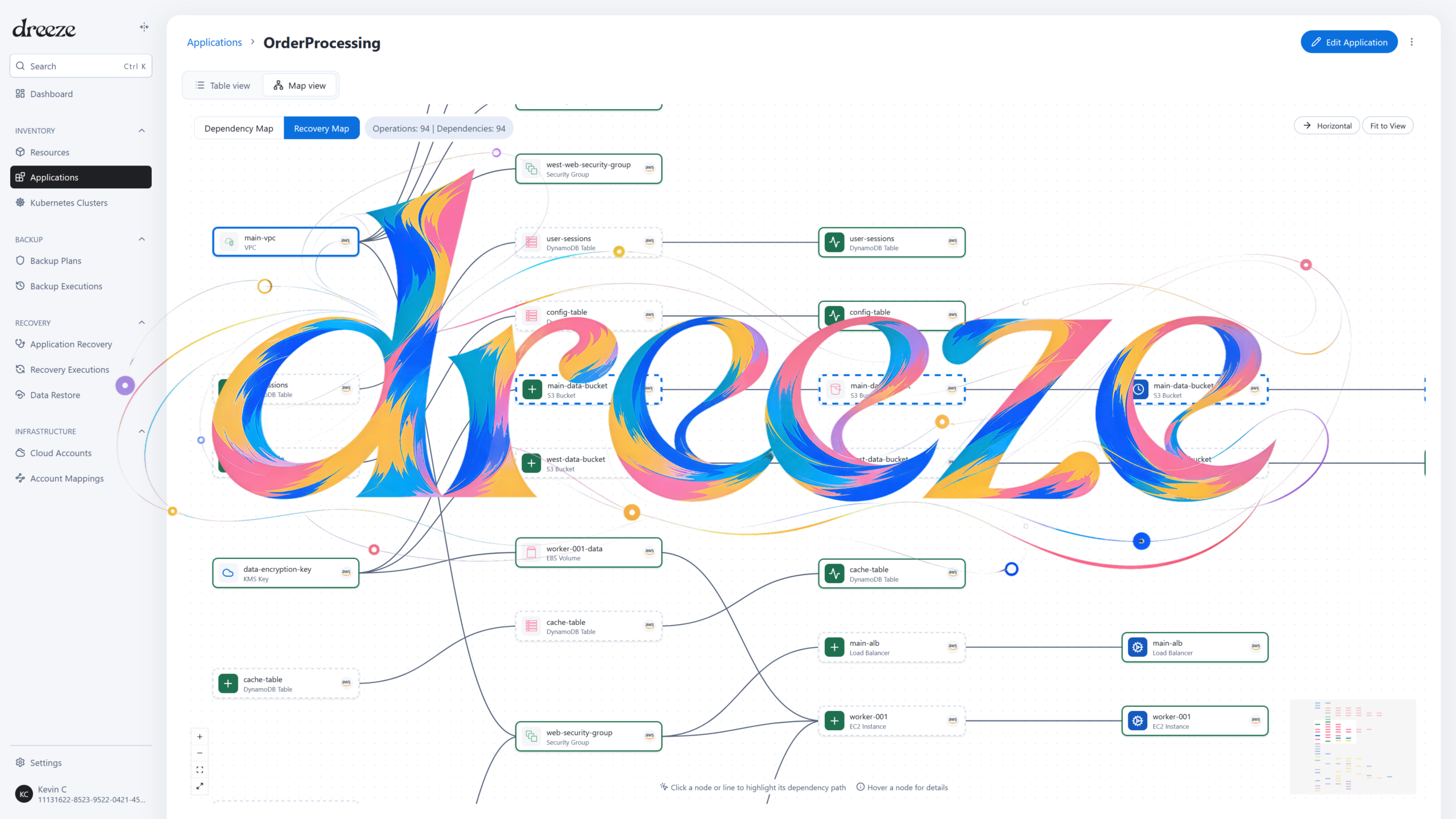
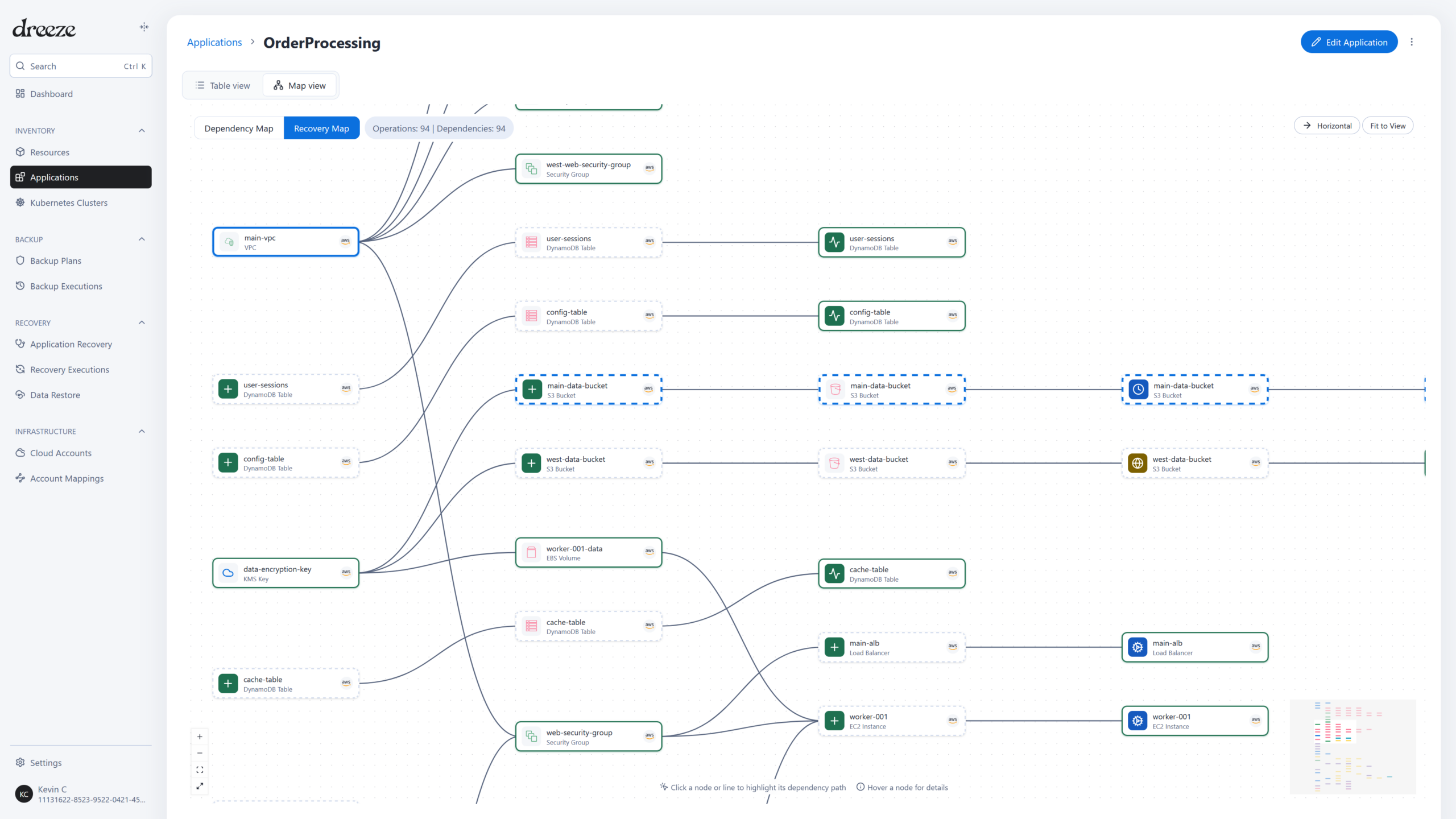
Dreeze is pioneering Application Revival to solve that problem. Instead of waiting for an outage to discover what’s missing, the platform maps everything an application needs, protects those resources, automatically executes a recovery and allows organizations to validate recoverability in advance. When something goes wrong, the path back is already there.
“Companies have spent years getting better at backing up data, but getting the data back doesn’t mean the business is back,” said Ziv Kedem, co-founder and CEO of Dreeze. “With cyber threats increasing and AI introducing new risks, enterprises need to assume that critical applications will go down. We started Dreeze because recovery needs to go further. Our goal is to make Application Revival the new standard, so companies know they have a proven path to bring their applications back when something goes wrong.”
“At Kashya, Zerto and now at Dreeze, Ziv, Oded and Avi have spent decades together building recovery technology that enterprises rely on. They know first-hand how the market needs to evolve,” said Dror Nahumi, general partner at Norwest. “As cloud environments grow more complex and the cost of downtime rises, enterprises need a better way to prepare for failure. Few teams understand the recovery problem as deeply as this one.”
Introducing Application Revival: ‘Back Means Back.’
Dreeze’s Application Revival platform is built around four capabilities that help enterprises prepare to recover complete cloud applications:
- Know – Autonomous Dependency Mapping
- Maps every resource and dependency to the application it serves and automatically generates a recovery plan built from your live environment as it evolves.
- Protect – Vaulted Backup
- Backs up everything an application needs to run, including data, config, keys, and every other dependency. Stored in an immutable, air-gapped vault with optional replication across regions for resilience.
- Orchestrate – Revival Automation
- Executes the end-to-end recovery plan. Rebuilds data, infrastructure, config, identity and connections in dependency order.
- Validate – Revival Confidence
- Proves recoverability by running the whole plan as an automated, end-to-end test resulting in a fully working application. No production impact or manual cleanup afterward.
Together, these capabilities give enterprises a tested recovery plan to revive their applications when an outage or disruption hits.
Dreeze has 70 employees across Israel and the United States and plans to use the funding to accelerate product innovation, grow its sales and marketing teams, and bring Application Revival to more enterprises as demand grows for a better way to recover cloud applications.
Dreeze for AWS is in General Availability. Dreeze for Microsoft Azure is in Early Access and will GA in early 2027.
To learn more about Dreeze, sign up for our on-demand webinar and visit us at booth #2126 at AWS re:Invent November 30 – December 3, 2026.
Dreeze application mapping
About the author