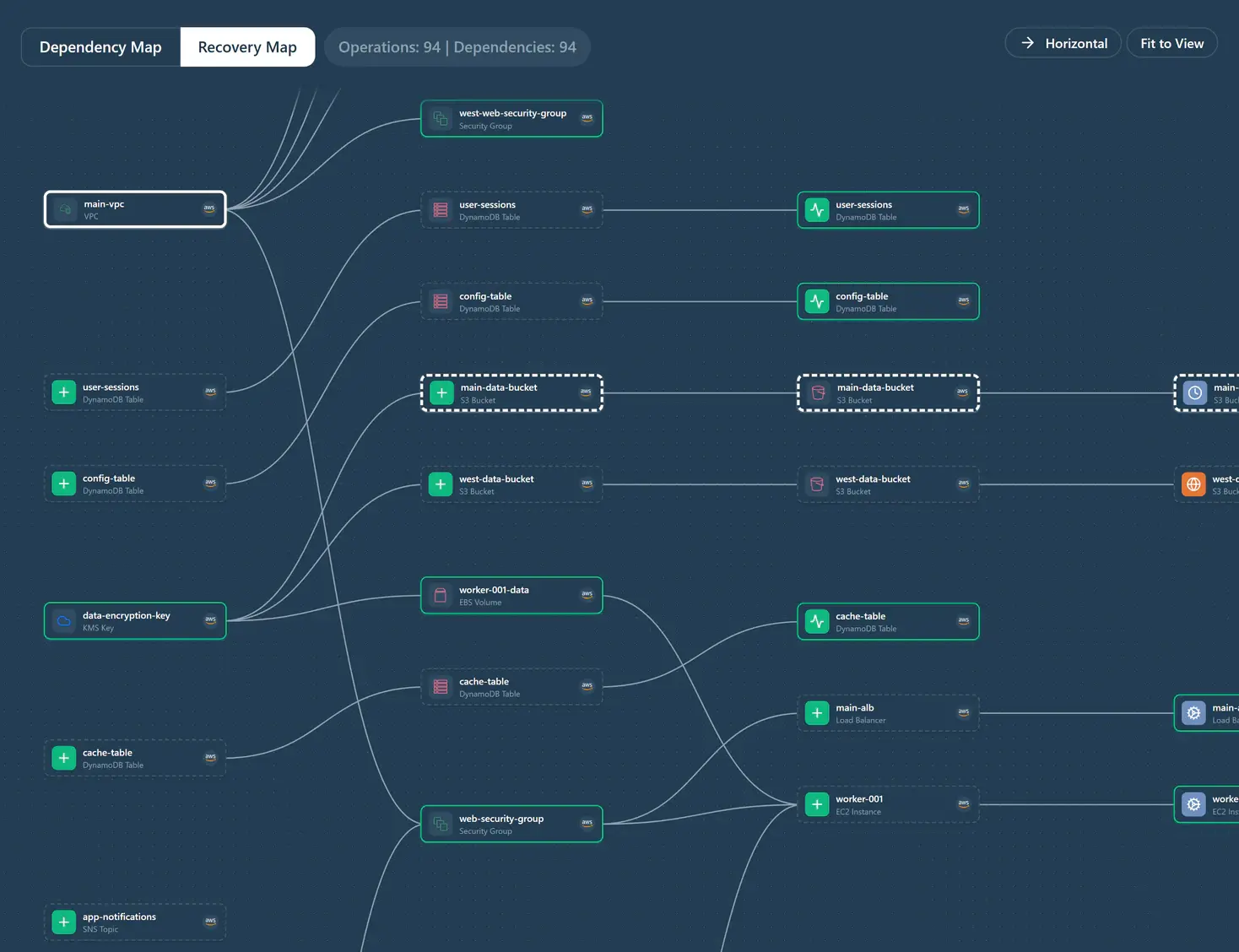
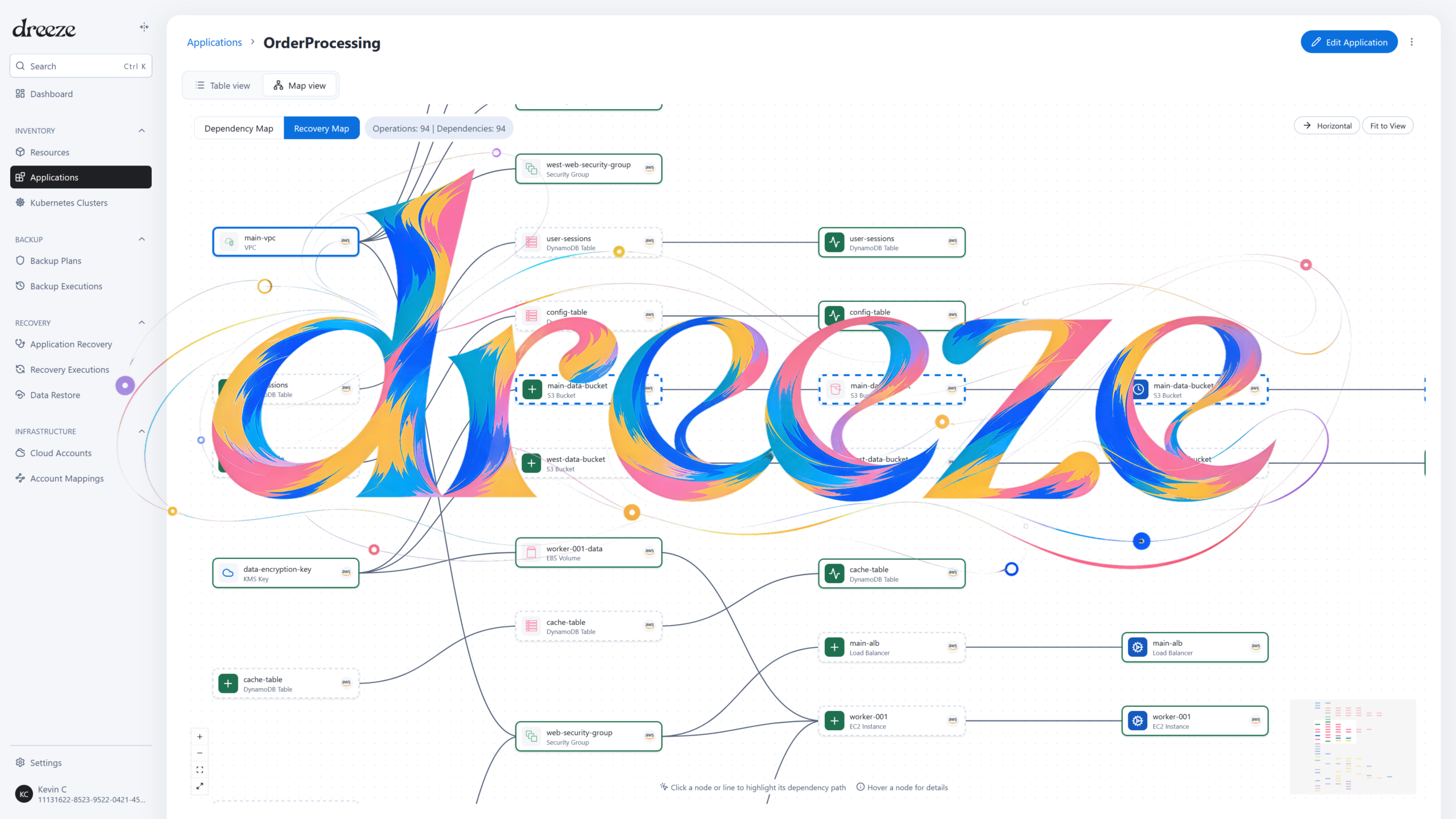
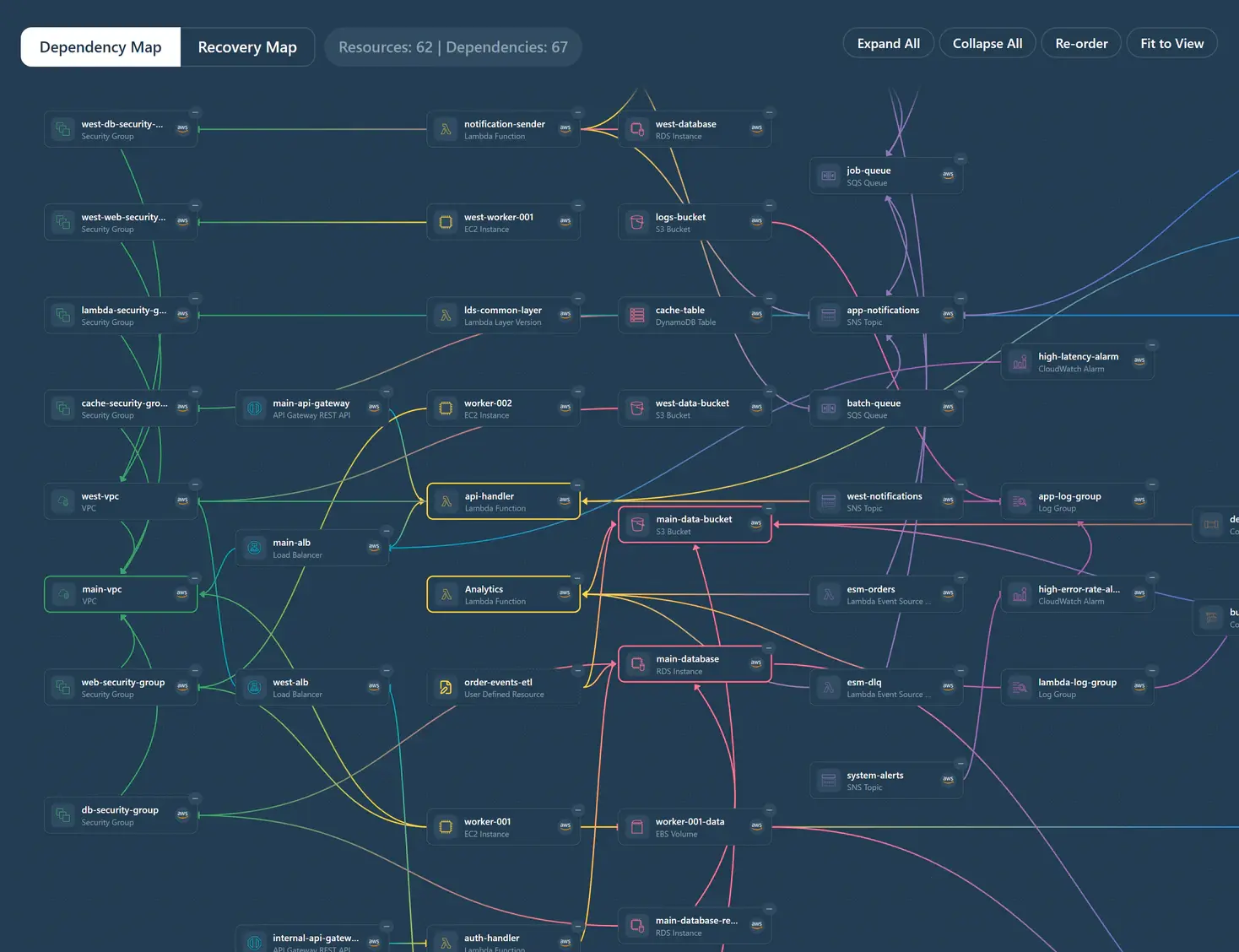
- Scans accounts, regions, and EKS clusters every 24 hours or on demand
- Reads 265+ connection types straight from resource configuration
- Uses your tags, IaC, Helm, and namespaces as optional inputs
I’m trained by Dreeze on Dreeze so fire away and I’ll share more about our Application Revival platform.
Across accounts, regions, and Kubernetes clusters.
Dynamically built from what’s running,
no tags or IaC required.
Data copies plus all configs
and keys each app needs.
Backups locked in a cyber vault you own.
In compliance mode, not even admins can tamper.
No installer and no in-guest agents.
Open API and Dreeze MCP for your AI workflows.
Discovery through a read-only role
and your data never leaves your accounts.
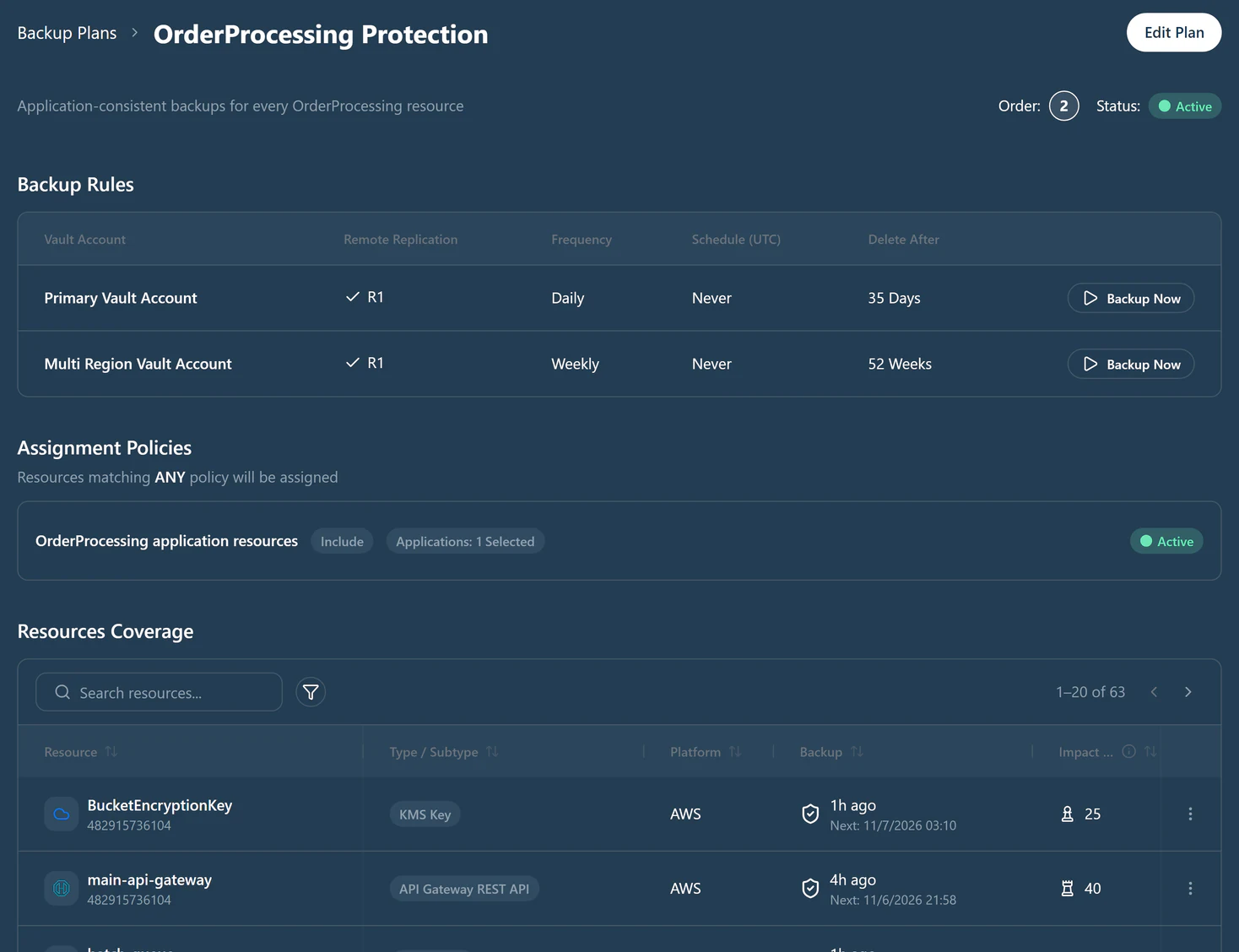
A read-only scan of one AWS account or Azure subscription maps your applications, their dependencies, and that one sneaky shared resource you had no idea was so critical.
Explore the world of Application Revival with Dreeze.
Blog
Founded by the team behind Zerto, Dreeze introduces a new approach to recovery as cyberattacks, AI and cloud complexity expose the limits of traditional backup.
Blog
Application Revival with Dreeze starts with autonomous application dependency mapping. Here's how Dreeze combines a team of skilled AI agents with the expertise of our cloud-native engineers & architects.
Whitepapers
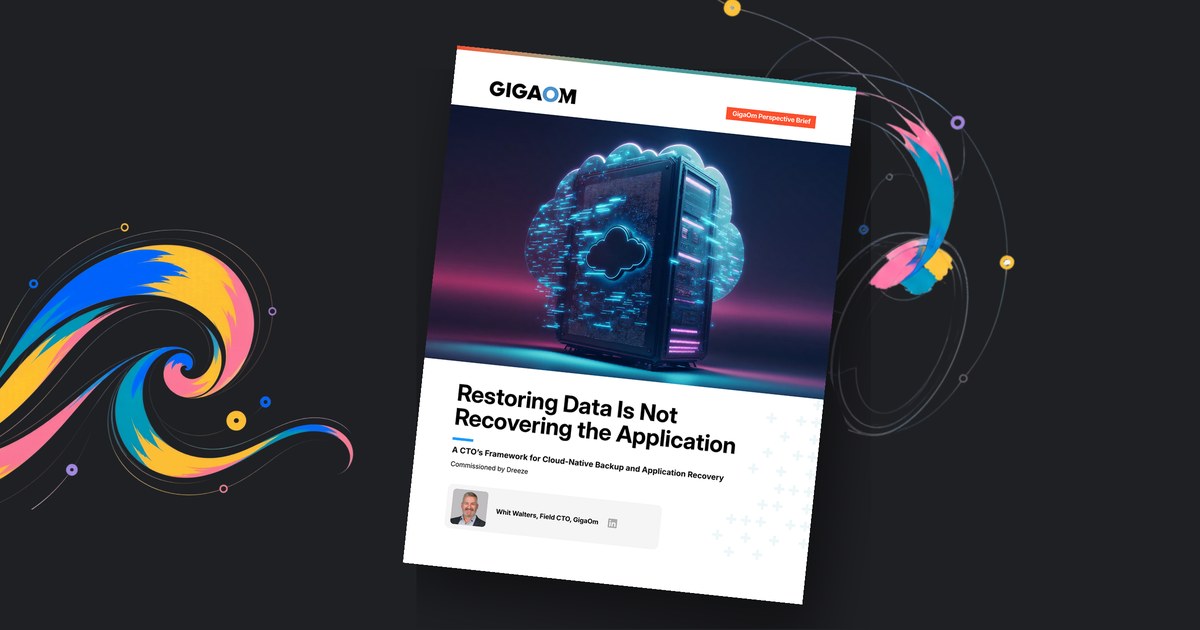
A CTO’s Framework for Cloud-Native Backup and Application Recovery
It’s backup and recovery that brings back the whole cloud app, not just its data or individual resources. Dreeze backs up the infra, config, identity, keys, and secrets along with the data, rebuilds it all in the right order, and validates the rebuild before you need it during an incident.
An application is everything a workload needs to run, not just its data: compute, storage, networking, identity, messaging, keys and the connections between them. Dreeze discovers every resource in your live environment and groups them into applications using AI and code together, with membership always coming from the dependency graph.
Your tags, infrastructure as code and GitHub repos help if you have them, but Dreeze doesn’t need any of them. And you can adjust anything it finds.
The data and everything around it, captured together at the same recovery point: databases, volumes and objects, plus the infrastructure, config, identity, keys and secrets the app depends on. The Revival Plans themselves are backed up too.
It all goes into an immutable vault in an account you own, and can be copied to a second region if you want.
No. Discovery uses a read-only role and your data never leaves your accounts. Backups go to a dedicated vault account in your own estate, encrypted with keys that never leave your account.
Even a clean room recovery happens in your tenant, not Dreeze’s, so you stay in the driver’s seat.
Every app’s data and config land in a logically air-gapped vault account you own, locked the moment they’re written and encrypted with your own keys. In compliance mode, not even a compromised admin can delete them early.
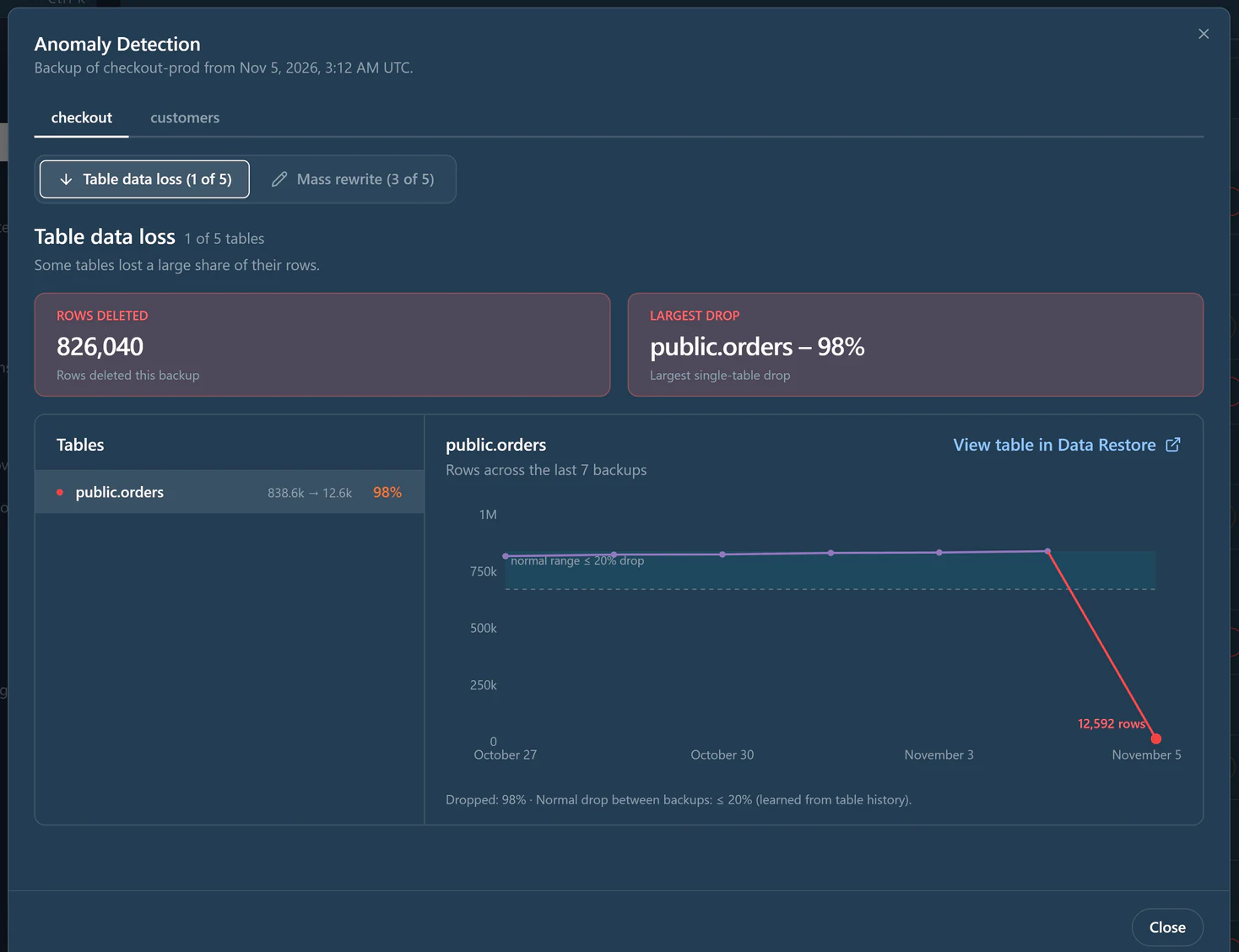
Anomaly checks compare every backup to that resource’s history and flag bulk deletes, missing tables, slow drains and mass rewrites, so you can pick a recovery point from before the damage. Dreeze then rebuilds the whole app in an isolated clean room, where you can scan it with the security tools you already trust before anything reconnects.
No. Dreeze maps from your live environment, so you recover what’s actually running, not what someone meant to deploy. Your tags and IaC are optional inputs: if you use them, great, but Dreeze doesn’t depend on them, which matters most on the day your IaC no longer matches what’s running.
You decide. Set the retention policy per application to control exactly what gets backed up and how often, and Dreeze shows a cost estimate alongside it so you can compare it with what you pay today.
Dreeze rescans your accounts, regions and EKS clusters every 24 hours or on demand, and backup plans assign themselves by rule, so new or modified resources that match are covered automatically.
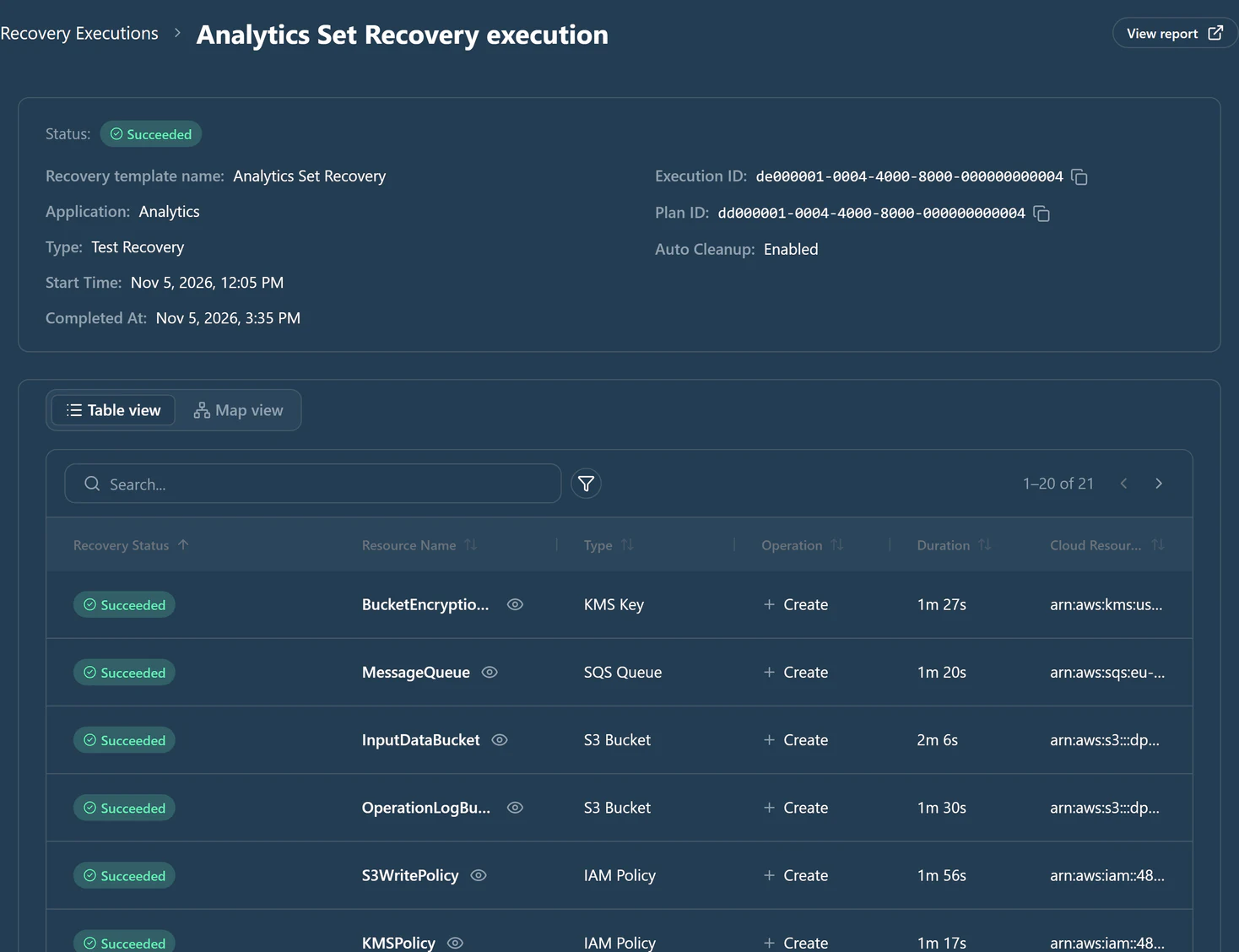
No. Dreeze runs the whole plan in an isolated environment without touching production, cleans up afterward, and leaves a report of what ran, in what order, how long it took and how it turned out. You can run tests on demand or on a schedule.
Production only gets touched if you say so.
Dreeze AI takes on the heavy lifting, from autonomous dependency mapping to AI-assisted recovery tests, so you can scale your team without adding headcount. The Dreeze agent proposes app groupings and explains them, you can edit anything it proposes, and membership always comes from the dependency graph.
Dreeze always pairs AI with deterministic code, so it doesn’t hallucinate apps or act without your oversight. Prefer headless? Dreeze MCP lets your own agents check status, dig into a failed backup or kick off a test, and admins choose whether assistants get no access, read-only or read-write.
Dreeze was founded by Ziv Kedem, co-founder and CEO, with his brother Oded Kedem and Avi Raichel. Ziv and Oded first worked together at Kashya, which built a continuous data protection and replication product and was purchased by EMC in 2006, where it became RecoverPoint. In 2009 they founded Zerto, developing disaster recovery technology for virtualized servers, and were joined there by Avi Raichel, previously VP Information Systems at Amdocs. Zerto was acquired by HPE in 2021.
Dreeze is their third startup, this time focused on backup and recovery for the cloud era.